GSTIN Number Format Explained: How to Read a GST Identification Number
Decode any 15-digit GSTIN: state code, PAN, entity number, check digit, and verification steps to avoid invoice fraud before accepting bills today.
- A GSTIN contains state code, PAN, entity number, default character, and check digit in a fixed 15-character format.
- Verify GSTIN before accepting invoices so fake numbers do not create ITC, vendor, or compliance risk.
- GSTIN format checks should be paired with portal status checks because a correctly formatted GSTIN can still be inactive or cancelled.
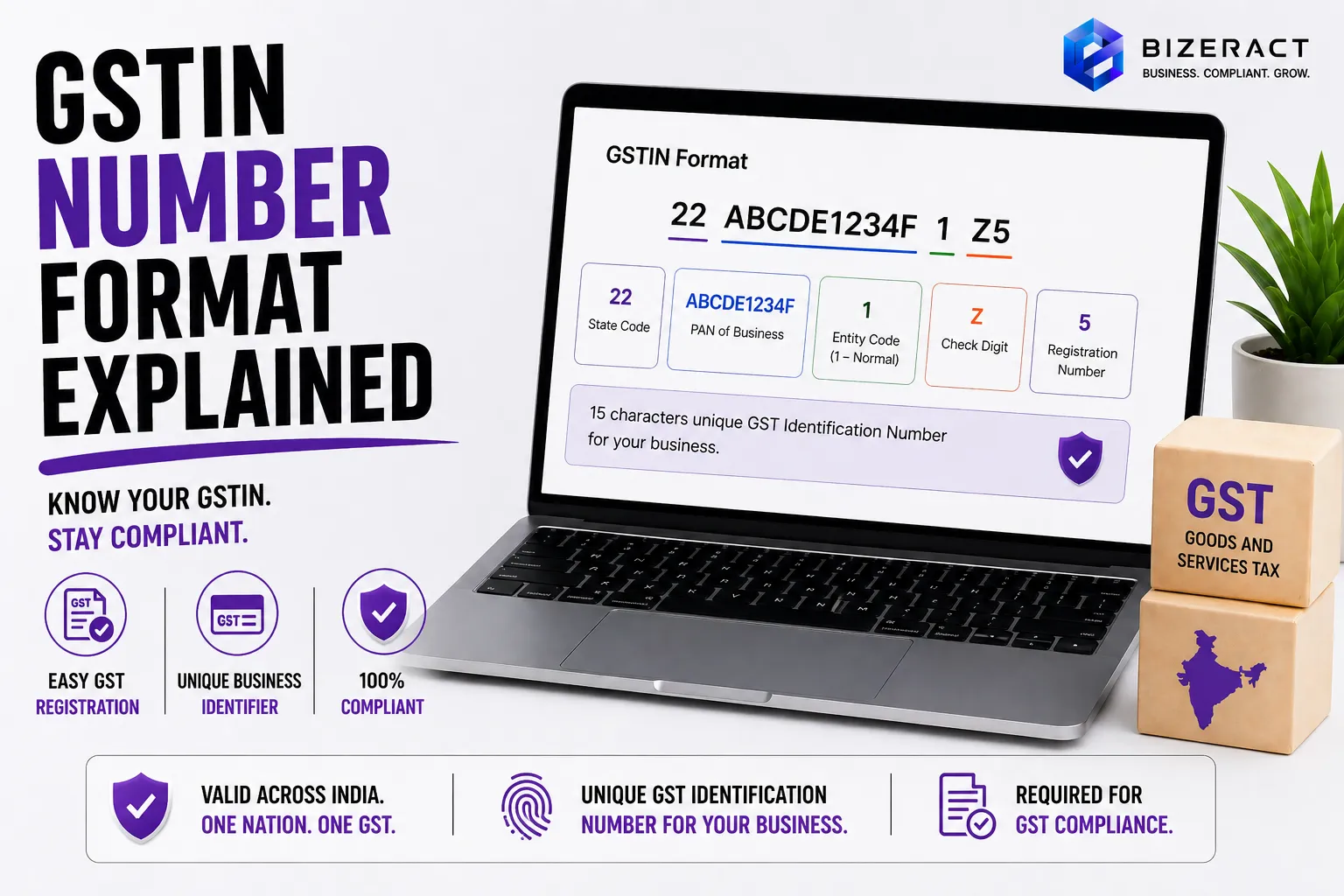
Every GST invoice carries a 15-digit GSTIN - the unique tax identity of a registered business. Most small business owners treat it as a random string. It isn't. Each digit encodes specific information, and reading a GSTIN correctly is your first line of defence against fake vendors and blocked ITC.
This guide explains the GSTIN number format in plain English - how each digit is assigned, how to verify one in 10 seconds, and the red flags that separate a real GSTIN from a fabricated one.
What is a GSTIN?
GSTIN stands for Goods and Services Tax Identification Number. It is a 15-character alphanumeric identifier issued to every business registered under GST in India. The GSTIN is printed on every GST-compliant invoice, e-way bill, and return.
One business gets one GSTIN per state it operates in. A company with offices in Mumbai, Bangalore, and Chennai has three separate GSTINs - all tied to the same PAN.
Who needs to understand the GSTIN format?
- Buyers who want to verify supplier legitimacy before paying
- Accountants reconciling invoices with GSTR-2B
- E-commerce sellers listing under a GSTIN
- Freelancers issuing B2B invoices
- Finance teams automating vendor onboarding
Benefits of reading a GSTIN correctly
- Spot fake vendors instantly
- Prevent ITC reversal on invalid invoices
- Reduce reconciliation errors with GSTR-2B
- Identify the state of the supplier without asking
- Catch PAN inconsistencies between documents
GSTIN number format: digit by digit
The 15-digit GSTIN follows this pattern: SS PPPPPPPPPP E Z C
- Digits 1–2 - State Code: A 2-digit number indicating the state (e.g., 27 for Maharashtra, 29 for Karnataka, 33 for Tamil Nadu).
- Digits 3–12 - PAN: The 10-character PAN of the business or proprietor.
- Digit 13 - Entity number: A number from 1–9 or A–Z indicating the registration count for that PAN in that state.
- Digit 14 - Z by default: A fixed "Z" in most cases.
- Digit 15 - Check digit: Alphanumeric check code used for validation.
Example GSTIN: 27AABCU9603R1ZM
- 27 - Maharashtra state code
- AABCU9603R - PAN of the business
- 1 - First registration under this PAN in Maharashtra
- Z - Default letter
- M - Check digit
State codes in GSTIN (quick reference)
- 07 - Delhi
- 09 - Uttar Pradesh
- 19 - West Bengal
- 24 - Gujarat
- 27 - Maharashtra
- 29 - Karnataka
- 32 - Kerala
- 33 - Tamil Nadu
- 36 - Telangana
How to verify a GSTIN online: step by step
- Visit the GST portal at gst.gov.in
- Click Search Taxpayer → Search by GSTIN / UIN
- Enter the 15-digit GSTIN
- Check the legal name, trade name, state, status (Active / Cancelled / Suspended)
- Match the state code against the state you expect
- Verify the PAN portion matches the vendor's invoice
Common mistakes when reading a GSTIN
- State mismatch - invoice state and GSTIN state don't match
- Wrong PAN embedded - PAN on GSTIN doesn't match PAN on the vendor's invoice
- "Cancelled" status missed - ITC claimed on cancelled GSTIN gets reversed
- Typos - accountants manually entering 15 digits make O/0 and I/1 errors
- Ignoring entity number - two registrations under the same PAN look almost identical
Frequently Asked Questions
How many digits is a GSTIN?
15 alphanumeric characters.
How do I find a business's GSTIN?
Use the GST portal's Search Taxpayer tool or ask the vendor directly. Every invoice must carry it.
Can two businesses share the same GSTIN?
No. Every GSTIN is unique to a specific PAN and state combination.
What is the difference between GSTIN and PAN?
PAN is the 10-character permanent account number issued by the Income Tax department. GSTIN is the 15-character GST identity that embeds your PAN inside it.
Is GSTIN the same as GST number?
Yes. "GST number" in common usage refers to the 15-digit GSTIN.
Can a GSTIN be cancelled?
Yes - voluntarily by the taxpayer or by the officer for non-compliance. Always re-verify status.
Where does the 13th digit come from?
It indicates how many GST registrations the PAN holds in that state. The first registration gets "1", the tenth gets "A", and so on.
What should you do next?
Reading a GSTIN is a 10-second skill that saves thousands in reversed ITC and prevents invoice fraud. Bookmark the state-code list and verify every new vendor on the portal before the first payment.
Get GST registration in 24 hours with expert support. Start with our GST registration bundle or read online GST registration for pan-India filings.
What to verify before acting on GSTIN Number Format Explained
Rules and platform behaviour change after an article is published. Confirm thresholds, registration status, return forms, document rules, and portal notices against the GST Portal before you act on anything below, because the right answer depends on your entity, state, turnover, and current setup.
Going deeper: GST Registration, GST Registration Online India, and GST Registration for Small Business.
Frequently asked questions
What is the short answer on GSTIN Number Format Explained?
Decode any 15-digit GSTIN: state code, PAN, entity number, check digit, and verification steps to avoid invoice fraud before accepting bills today. The practical next step is to compare the article checklist with your business model, state, turnover, documents, and tools before you act.
What should I verify before using this guide?
Verify the latest thresholds, filing dates, forms, documents, and portal guidance from the official source links on this page. Tax rules, ad platform policies, software APIs, marketplace requirements, and search documentation can change after publication.
When should I get professional help?
Get help when the decision affects GST registration, tax filing, paid media budget, production website performance, analytics accuracy, or business-critical automations. A short expert review usually costs less than penalties, rework, bad data, or failed implementation.
Let's talk about your business.
Tell us what you're working on and where you want to go. We'll put together a plan. No obligation, no sales pitch.
- Free 30-minute call
- A plan built around your goals
- No obligation, no pressure
- Your own account manager