Mani Murugan
Articles by Mani

India-US Cross-Border Compliance: The Checklist for SMEs Running Both Entities
An India-parent with a US subsidiary (or vice versa) triggers filings on both sides that a single-country bookkeeper will miss — FEMA/RBI reporting, US BOI and EIN obligations, DTAA relief, and the calendar for both.
Read article
GST Rule 14A Tracker: Every Notification, Advisory and Change
A dated, maintained record of every change to the Rule 14A simplified GST registration scheme since it was notified in October 2025. Notification numbers, effective dates, portal forms and what each change actually altered.
Read article
Filed Your ITR and Nothing Has Moved? How AIS Mismatches Delay Refunds in AY 2026-27
Returns process in 20–45 working days from e-verification, and refunds land 3–7 days after that — unless AIS, Form 26AS or an unvalidated bank account gets in the way. What actually triggers a notice, and how to fix it before 31 December 2026.
Read article
RBI August 2026 Policy Preview: 68 of 72 Economists Expect a Hold, None Expect a Cut
The MPC meets 3–5 August 2026 with the repo rate at 5.25% and June retail inflation at 4.38%. A Reuters poll of 72 economists found 68 expecting a hold and zero expecting a cut — what that means for EMIs, FDs and SMB borrowing.
Read article
GST on Intermediary Services: Section 13(8)(b) Is Gone, and Your Commission From Abroad Is Now an Export
Section 157 of the Finance Act 2026 omitted Section 13(8)(b) of the IGST Act from 30 March 2026. Commission and facilitation income from overseas clients is now zero-rated export — but services from foreign agents attract IGST under reverse charge.
Read article
ITR-3 and ITR-4 Filers Now Get 31 August 2026: India's First Permanent Staggered ITR Deadline
AY 2026-27 has four ITR due dates, not one. ITR-1/ITR-2 stay at 31 July 2026 while non-audit ITR-3 and ITR-4 filers move permanently to 31 August 2026 under Budget 2026 — plus what it means for 234A interest, audit cases and July planning.
Read article
New TDS and TCS Forms 138, 140 and 143 Are Due 31 July 2026: What Changed Under the Income-tax Act 2025
Form 138 replaces 24Q, Form 140 replaces 26Q and Form 143 replaces 27EQ from Q1 of Tax Year 2026-27. What the Income-tax Act 2025 changed, when it applies to a payment, why section numbers moved, and the four checks to run before 31 July 2026.
Read article
GST Portal Changes From 1 August 2026: Ship-To GSTIN, E-Way Bill Closure and the Revised AATO Window
GSTN deferred the mandatory Ship-To GSTIN field and the voluntary e-way bill closure facility from 15 June to 1 August 2026, and revised the AATO amendment timeline from 1 July. What each change means and the master-data cleanup to finish first.
Read article
MSMED (Amendment) Bill 2026: Delayed Payments, Arbitral Award Enforcement and More Facilitation Councils
The MSMED (Amendment) Bill 2026 is listed for the Monsoon Session running 20 July to 13 August 2026. It targets delayed-payment redress, enforcement of arbitral awards for micro and small enterprises, and state flexibility over MSEFC composition.
Read article
Missed Your ITR Deadline in 2026? The Staggered Calendar Changes the Penalty Math
With four ITR due dates in AY 2026-27, Section 234A interest now starts on a form-specific date. What a belated return costs, why the lost loss carry-forward usually dwarfs the ₹5,000 fee, and the options after 31 December 2026.
Read article
Small Business Tax in India: The Complete 2026 Guide to Income Tax, GST, TDS and Advance Tax
Every tax an Indian small business pays in FY 2025-26 — income tax on profits, GST, TDS, advance tax and professional tax — plus presumptive taxation under 44AD/44ADA, the right ITR form, audit thresholds and key deadlines. Built for proprietors, LLPs and Pvt Ltd founders.
Read article
How to File Income Tax Return Online in India: Step-by-Step 2026 Guide (AY 2026-27)
File your ITR online on incometax.gov.in for FY 2025-26 in under 30 minutes. A full walkthrough — prerequisites, picking the right form, old vs new regime, verifying pre-filled data, paying self-assessment tax via Challan 280, e-verification within 30 days and checking your refund status.
Read article
Personal Income Tax Filing in India 2026: Slabs, Regimes, Deductions and Which ITR to Use
A salaried individual’s guide to income tax for FY 2025-26 — new vs old regime slabs, the ₹12.75 lakh zero-tax threshold, deductions that survive under each regime, capital gains on stocks and mutual funds, and choosing between ITR-1 and ITR-2 before the 31 July 2026 deadline.
Read article
Penalty for Late Income Tax Filing in India 2026: Section 234F Fee, 234A Interest and ITR-U
Miss the 31 July 2026 ITR deadline and the costs stack up — the Section 234F late fee (up to ₹5,000), Section 234A/234B/234C interest, lost loss carry-forward, delayed refunds, and in serious cases prosecution under 276CC. Here is every consequence and how to limit the damage with a belated or updated return.
Read article
EPF Scheme 2026 Explained: What the ₹15,000 Ceiling and 15-Day Return Mean for Your MSME Payroll
The Ministry of Labour notified the EPF Scheme 2026 on 29 June 2026, replacing the 71-year-old 1952 scheme. Rates and the ₹15,000 ceiling are unchanged, but employers now face 15-day returns, electronic filing, and liability for contractor defaults. Here is what changes for small-business payroll.
Read article
CBDT's 6 Compulsory Scrutiny Triggers for FY 2026-27: Which Small-Business ITRs Get a 143(2) Notice
CBDT issued its compulsory-scrutiny guidelines for FY 2026-27 on 4 June 2026, listing six parameters (CS-01 to CS-06) that decide which FY 2025-26 returns face complete scrutiny. Selection is not random, and the Section 143(2) notice deadline is 30 June 2026. Here is what realistically affects an SMB.
Read article
GSTR-3B Phase 2 Is Coming in 2026: How Locked ITC and the IMS Auto-Accept Trap Can Cost Your SMB Its Credit
After Phase 1 locked outward liability, GSTN is moving to Phase 2 — hard-locking Input Tax Credit in GSTR-3B to GSTR-2B values, targeted around July 2026. Take no action in the Invoice Management System before the 14th and an invoice auto-accepts into your credit. Here is the reconciliation workflow to set up first.
Read article
GSTAT Is Live: Your 31 July 2026 Deadline and the 10% Pre-Deposit Trap Every MSME Must Avoid
The GST Appellate Tribunal began hearing cases on 16 February 2026, ending an eight-year void. Appeals for orders communicated before 1 May 2026 are now due 31 July 2026. The pre-deposit is an extra 10% over the 10% already paid — paid in cash, not ITC. Here is how to file without getting rejected.
Read article
GSTR-9 and 9C for FY 2025-26: 5 Format Changes That Will Trip Up MSMEs Before 31 December 2026
The GST annual return for FY 2025-26 is due 31 December 2026, and Notification 16/2025 rebuilt GSTR-9 to auto-populate ITC from IMS data and demand rule-wise reversal disclosures. A new Table 17 auto-computes late fees separately for each form. Here is the checklist to start now, not in December.
Read article
Four Labour Codes Are Live: What the 50% Wage Rule Does to Your MSME Payroll
The four Labour Codes took effect on 21 November 2025, folding 29 laws into four. The 50% wage rule can lift PF and gratuity costs 5-15%. Here is how small businesses should restructure salaries, appointment letters and PF/ESI before the Central Rules finalise.
Read article
TCS on Foreign Remittances Cut to 2%: New LRS Rules from 1 April 2026
Budget 2026 cut TCS on education and medical remittances from 5% to 2% and made overseas tour packages a flat 2% with no threshold. On a ₹30 lakh transfer that is ₹60,000 less cash blocked. Here is what changes under LRS and how to reclaim TCS in your ITR.
Read article
MCA's CCFS-2026 Amnesty: Clear Overdue ROC Filings at ~90% Off Before 15 July
The MCA Companies Compliance Facilitation Scheme 2026 (CCFS-2026) lets companies clear pending AOC-4, MGT-7 and other overdue filings by paying only 10% of the additional fee — a roughly 90% waiver — between 15 April and 15 July 2026. Here is who qualifies and how to use the window.
Read article
The New Income-tax Act, 2025 Takes Effect: What Changes for Small Businesses
From 1 April 2026 the Income-tax Act, 2025 replaces the 1961 Act. Rates do not change, but the "Tax Year" concept, new TDS section codes, extended deadlines and a 100% penalty on ₹20,000+ cash deals do. Here is the small-business transition checklist.
Read article
Union Budget 2026-27 for MSMEs: ₹10,000 Cr Growth Fund, TReDS and CGTMSE Explained
The Budget 2026-27 backs MSMEs with a ₹10,000 crore SME Growth Fund, mandatory CPSE settlement on TReDS, a CGTMSE guarantee for invoice discounting, and "Corporate Mitras" for cheap compliance. Here is what each measure means and who can use it.
Read article
TReDS Is Now Mandatory for ₹250 Cr+ Buyers: Get Your Invoices Paid in Days, Not Months
Every company above ₹250 crore turnover and all CPSEs must be on TReDS, the RBI invoice-discounting platform that has channelled over ₹7 lakh crore to MSMEs. Here is how small suppliers turn unpaid invoices into same-week, without-recourse cash.
Read article
ITR-U Now Has a 48-Month Window: How to Fix Old Tax Returns in 2026
The Finance Act, 2025 doubled the Updated Return (ITR-U) window from 24 to 48 months from 1 April 2025. You get more time to correct old returns — but the additional tax rises from 25% to 70% the longer you wait. Here is how Section 139(8A) works now.
Read article
TDS and TCS Threshold Changes from 1 April 2025: What Small Businesses Must Update
The Finance Act, 2025 raised TDS thresholds on rent, commission, professional fees, interest and dividend, removed TCS on the sale of goods, and lifted the TCS limit on foreign remittance. Here is the section-by-section before-and-after for FY 2025-26.
Read article
GSTR-3B Is Now Locked and Old Returns Are Time-Barred: The 2026 GST Filing Reset
Your GSTR-3B liability is now auto-populated from GSTR-1 and non-editable, and GST returns more than three years past due can no longer be filed. Combined with sequential filing and mandatory IMS from April 2026, GST filing has become far less forgiving. Here is what changed.
Read article
ITR Filing AY 2026-27: New August 31 Deadline for Small Businesses and Professionals
For the first time, ITR deadlines are staggered by form type — salaried filers stay at July 31, non-audit business and professional filers get until August 31, 2026. Here is what changed under the Finance Act, 2026 and what to do.
Read article
GST 2.0 for Small Businesses: The 5%, 18% and 40% Slab Reset and Your FY 2026-27 Checklist
The 56th GST Council collapsed four slabs into two main rates — 5% and 18% — plus a 40% sin/luxury rate, effective 22 September 2025. Here is what the GST 2.0 reset means for your pricing, ITC, and FY 2026-27 invoice housekeeping.
Read article
The MSME 45-Day Payment Rule (Section 43B(h)): What Small Buyers and Suppliers Must Get Right
Section 43B(h) disallows your tax deduction for payments to Micro and Small enterprises unless paid within 15 or 45 days. The 45-day cap is absolute. Here is how the rule works and what to fix before year-end.
Read article
GST IMS Is Now Mandatory (April 2026): The Deemed-Acceptance Trap That Decides Your ITC
From 1 April 2026 the Invoice Management System (IMS) is mandatory for all regular GSTR-3B filers, and Section 38 ties your ITC to accepted invoices. Inaction now equals acceptance — here is how IMS works and how to avoid the costly mistakes.
Read article
GST E-Invoicing in 2026: The ₹5 Crore Threshold and the 30-Day Reporting Clock Explained
E-invoicing is mandatory once your turnover crosses ₹5 crore in any year since 2017-18, and businesses above ₹10 crore must report invoices to the IRP within 30 days or lose the IRN. Here is who must comply and how to avoid blocked invoices.
Read article
E-Way Bill 2FA Is Mandatory: What Every Business and Transporter Must Set Up
Since 1 April 2025, two-factor authentication is mandatory for all taxpayers and transporters on the NIC e-way bill and e-invoice portals — regardless of turnover. Here is how the OTP options work and the GST-portal nuance most people miss.
Read article
GST Rule 14A Fast-Track Registration: 3-Day GSTIN Route for Small Taxpayers in India
Rule 14A lets eligible low-liability applicants choose a simplified GST registration route with Aadhaar authentication and 3-working-day electronic approval. See who qualifies, who should avoid it, and when to withdraw.
Read article
GST Biometric Aadhaar Authentication in 2026: Why New Registrations Get Sent to GSK
Biometric Aadhaar authentication is now a common GST registration checkpoint. Learn who must visit a GST Suvidha Kendra, what documents are verified, and why ARN generation can stop.
Read article
GST Registration for Quick Commerce Sellers: Blinkit, Zepto and Instamart Checklist for India
Quick-commerce seller onboarding usually needs GSTIN, FSSAI for food, clean bank details, SKU-wise HSN mapping, and monthly TCS reconciliation. Here is the GST registration checklist before pitching Blinkit, Zepto, or Instamart.
Read article
Virtual Office GST Registration in India: Address Proof, Physical Verification and Rejection Risks
Virtual office GST registration can work, but address proof, NOC, fixed-seat documents, signage, map location and officer verification must be clean. Use this 2026 checklist before filing.
Read article
First 30 Days After GST Registration: Invoice, GST Portal, Bank, Filing and ITC Checklist
A new GSTIN is only the start. Use this first-30-days checklist to download REG-06, set invoices, update bank and marketplace records, configure HSN, track first returns, and avoid nil-return penalties.
Read article
Indian SMB News June 2026: Fuel Shock, ECLGS 5.0, and the RBI June Policy Explained
June 2026 SMB roundup for India: petrol up ~7.8% and diesel ~8.6%, ECLGS 5.0 (₹18,100 crore) reaching ~1.1 crore MSME accounts, RBI repo held at 5.25%, binding collateral-free ₹20 lakh rule, data-first lending, and gold-duty forex measures.
Read article
Fuel Price Shock 2026: How Rising Diesel Squeezes Indian Small Business Margins
Diesel up ~8.6% but freight rates down 13–15%: the 2026 margin trap for Indian SMBs. Fuel is 30–45% of logistics cost. See the ICRA demand cut and how to reprice, surcharge, and protect cash flow.
Read article
RBI June 2026 Policy: Repo Held at 5.25% and What It Means for Small Business Loans
RBI held the repo rate at 5.25% on 5 June 2026 — third straight pause, neutral stance, CPI near 5.1%. Why banks haven’t passed the 125 bps cut through, and how SMB borrowers should fix loan structure now.
Read article
Data-First Lending in India: How GST and Bank Data Now Decide Your Business Loan
Indian lenders now underwrite SMBs on GST returns, bank statements, and cash flow — not collateral. AA-enabled loans crossed ₹1.6 lakh crore in FY25. Learn why cash businesses get squeezed and how to be lender-readable.
Read article
GST 2026 Outlook: Fine-Tuning, Faster Refunds, and Analytics-Led Enforcement Explained
GST in 2026 is refinement, not overhaul: 90% provisional refunds for inverted duty, ₹10 crore audit threshold for digital MSMEs, and GSTR-3B ITC hard-linked to GSTR-2B from April 2026. What small businesses must prepare.
Read article
India-South Africa MSME Cooperation 2026: What Export-Ready Small Businesses Should Prepare Now
India and South Africa discussed MSME cooperation on 1 June 2026 across finance, formalization, digitalization, skilling, and entrepreneurship. Here is what Indian SMBs should prepare before trade and matchmaking opportunities open.
Read article
KVIC FY 2025-26 Data: Rs.1.87 Lakh Crore Sales Signal a Bigger Market for Rural and Local Brands
KVIC reported Rs.1,87,105 crore sales and 2.04 crore employment in FY 2025-26. Learn what the 501% sales growth means for rural entrepreneurs, local product brands, packaging, GST readiness, and online channels.
Read article
PM Vishwakarma West Bengal Rollout 2026: 7.79 Lakh Artisans, Benefits, Loans and Document Checklist
PM Vishwakarma is set for rollout in West Bengal with 7.79 lakh enrolled artisans. Understand scheme benefits, toolkit support, Rs.3 lakh collateral-free loan structure, verification steps, and what applicants should prepare.
Read article
GST E-Way Bill Portal Changes from 15 June 2026: Ship To GSTIN, URP and Closure Workflow
GSTN e-way bill portal changes go live by 15 June 2026: mandatory Ship To GSTIN in bill-to/ship-to cases, URP for unregistered consignees, voluntary e-way bill closure, and API readiness for ERPs.
Read article
ECLGS 5.0 for MSMEs: 100% Guarantee Coverage and Working-Capital Checklist for 2026
ECLGS 5.0 targets Rs.2.55 lakh crore additional credit flow with 100% MSME guarantee coverage. Learn eligibility, 20% Q4 FY26 working-capital support, 5-year tenor, moratorium, and bank document checklist.
Read article
RBI MSE Loan Prepayment Charges Rule 2026: When Small Businesses Can Refinance Without Penalty
RBI pre-payment charge rules apply to loans sanctioned or renewed from 1 January 2026. See which MSE floating-rate business loans cannot carry foreclosure charges, the Rs.50 lakh lender threshold, and refinance checklist.
Read article
GST Changes in India for 2026: Rate Rationalisation, IMS, MFA, and 7 Updates SMBs Cannot Miss
Track 2026 GST changes affecting Indian SMBs: GST 2.0 two-rate structure, Invoice Management System (IMS), mandatory MFA, sequential return filing, e-invoice expansion, ISD shift, and TCS rate cut.
Read article
Indian SMB Environment 2026: 9 Policy, Banking, and Compliance Changes Founders Should Track Now
A practical 2026 update for Indian small businesses: revised MSME classification, collateral-free MSE loan ceiling raised to ₹20 lakh, ₹5 lakh crore CGTMSE corpus, mandatory AFA for bulk payouts, DPDP Act rollout, ONDC TEAM Initiative, e-invoicing expansion, and Income-tax Act 2025.
Read article
Collateral-Free MSME Loans up to ₹20 Lakh: 2026 Bank Readiness Checklist for Small Businesses
RBI-linked MSME lending changes make collateral-free MSE loans up to ₹20 lakh live from April 2026. Learn who qualifies, what banks still check, and how to prepare GST, bank statement, Udyam, and cash-flow proof before applying.
Read article
PSB MSME Credit Grew 18.2% in FY 2025-26: What Small Businesses Should Ask Their Bank Now
Public sector banks reported ₹1.98 lakh crore profit, 1.93% gross NPA, and 18.2% MSME advance growth in FY 2025-26. Here is how SMBs can use the stronger bank balance-sheet cycle to negotiate working capital, limits, and rates.
Read article
TEAM Initiative for Small Businesses: How MSMEs Can Use ONDC Support to Sell Online in 2026
The MSME Ministry’s TEAM Initiative under RAMP is pushing ONDC enablement for micro and small enterprises. Learn what support is included, who should apply, and how to prepare catalogues, packaging, GST, logistics, and payment workflows.
Read article
Corporate Treasury Bulk Payouts under AFA: SAP, Oracle, Tally & Zoho Compliance Playbook (2026)
Single-token batch authentication is dead from 1 April 2026. ERP-to-bank H2H integrations need per-batch or per-payment AFA. Pattern A vs Pattern B, vendor master audit, SAP/Oracle/Tally/Zoho configuration, and a 30-day treasury compliance plan.
Read article
Cross-Border Outward Remittance for Indian SaaS Exporters: LRS vs FEMA Business Channel (2026)
SaaS founders cannot pay AWS bills under personal LRS — it is a FEMA violation. Full guide to FEMA purpose codes, Form A2 / 15CA-CB, Section 195 TDS, 18% GST RCM on imported SaaS, SOFTEX reconciliation, and founder dividend repatriation.
Read article
Form 15G / 15H Centralised Electronic Submission: One Declaration, All Banks (FY 2026-27 Guide)
From FY 2026-27, Form 15G/15H goes centralised — one online declaration covers all banks, NBFCs, post offices, bond issuers. AIS cross-check, eligibility tests, the ₹50K interest trap, family-PAN strategy, and what 15G/15H cannot prevent (Section 194N).
Read article
FPI Bond Tax Cut to 10%: What the 2026 Budget Means for Indian SMB Lending Rates
Section 194LD withholding cut from 20% to 10%, Section 194LC extended to green and social bonds, VRR simplified. NBFC wholesale funding costs fall 50-150 bps. Realistic 30-60 bps pass-through to SMB borrowers — and the refinance math that captures it.
Read article
Unregistered Type I NBFC: PRAVAAH Deregistration Window Open Till 31 December 2026
RBI 2026 framework lets eligible NBFCs surrender CoR via PRAVAAH portal. Asset size below ₹1,000 crore at group level, no public funds, no customer interface. Application window 1 Jul to 31 Dec 2026. Eligibility tests, document checklist, and borrower implications.
Read article
RBI 2FA Mandate 2026: Payment Gateway Compliance Checklist for Razorpay, Cashfree, PayU & Stripe
From 1 April 2026 every digital payment needs two factors. Get a PSP-by-PSP compliance checklist for Razorpay, Cashfree, PayU, Stripe India, Easebuzz, Instamojo. Bulk-payout ERP audit for SAP, Tally, Zoho. Checkout abandonment benchmarks and the 30-day action plan.
Read article
Section 194N TDS on Cash Withdrawal: 2% vs 5% Tiers and How to Avoid the Non-Filer Trap (2026)
Section 194N deducts 2% TDS above ₹1 crore for ITR filers, 2% above ₹20 lakh + 5% above ₹1 crore for non-filers. Filing one nil-return ITR restores the ₹1 crore threshold. Bank verification, refund flow, aggregation rule, and worked examples.
Read article
RBI E-mandate Framework 2026: SaaS & Subscription Churn Playbook for India
RBI mandates 24-hour pre-debit alert with one-tap opt-out for every recurring payment. ₹15,000 frictionless ceiling, ₹1L carve-out for SIPs/insurance. Churn impact model, pricing strategy, and retention workflow for Indian SaaS, OTT, edtech.
Read article
TDS on NBFC Interest: Section 194A Rules, 10% Rate & Section 40(a)(ia) Disallowance (2026)
NBFCs are not exempt under Section 194A. Deduct 10% TDS on NBFC interest above ₹5,000 a year, see how processing fees are treated, and avoid a 30% disallowance.
Read article
SFT ₹10 Lakh Cash Deposit Rule: How to Avoid a Section 142(1) Notice (2026 Guide)
Deposited ₹10 lakh or more in cash this year? Your bank reports it to the Income Tax Department under SFT. See when that triggers a notice and how to reply.
Read article
RBI New Rules April 2026: 2FA Mandate, NBFC TDS & Cash Reporting — A Business Guide
RBI April 2026 overhaul: mandatory 2FA on every digital payment, 10% TDS on NBFC interest above ₹10,000, ₹10 lakh PAN reporting on cash, E-mandate Framework 2026, NBFC registration easing. What every Indian business must do this quarter.
Read article
GST 2.0 Rate Changes in India: New Slabs Effective 22 September 2025
56th GST Council collapsed 4 slabs into 5%/18% plus a 40% sin/luxury rate from 22 Sep 2025. Full slab-by-slab mapping, transition rule, and SMB action plan.
Read article
Income-tax Act, 2025: What It Means for Indian Taxpayers from 1 April 2026
New Income-tax Act 2025 — 536 sections, 23 chapters — replaces the 1961 Act from 1 April 2026. Slabs unchanged, sections renumbered, "tax year" replaces previous/assessment year.
Read article
India Tax Compliance Calendar 2026: GST, TDS, ITR & Advance Tax Due Dates
Complete May 2026 to March 2027 deadline calendar — GSTR-1 (11th), GSTR-3B (20th), TDS Q4 (31 May), ITR (31 Jul), advance tax (15 Jun/Sep/Dec/Mar), GSTR-9 (31 Dec).
Read article
New MSME Classification India: Investment & Turnover Limits from 1 April 2025
MSME limits raised — Micro ₹2.5 cr/₹10 cr, Small ₹25 cr/₹100 cr, Medium ₹125 cr/₹500 cr from 1 April 2025. Section 15 payment clock, Section 43B(h), Udyam profile updates.
Read article
GST Portal Changes 2025: MFA, ISD, IMS, GSTR-3B Lock & Rule 14A Explained
Five GST portal changes in 2025: MFA mandatory, ISD compulsory, Invoice Management System live, GSTR-3B non-editable, Rule 14A 3-day registration. Effective dates and SMB actions.
Read article
GST & Finance India: Latest Changes, Timelines and Due Dates (May 2026)
GST 2.0 slabs effective 22 Sep 2025, Income-tax Act 2025 from 1 Apr 2026, MFA/ISD/IMS portal changes, ITR 31 Jul 2026, Q4 TDS 31 May 2026 — full SMB compliance calendar.
Read article
Why GST Registration Gets Rejected: Top 10 Reasons & How to Fix Them (2026)
GST registration rejected? The top 10 reasons your application fails - old electricity bill, PAN-Aadhaar mismatch, wrong HSN, weak NOC - plus how to respond to Form REG-03 and reapply after Form REG-05.
Read article
Types of GST Registration in India: Regular, Composition, CTP, NRTP, ISD, TDS & TCS Explained
7 types of GST registration explained - Regular, Composition Scheme, Casual Taxable Person, Non-Resident, Input Service Distributor, TDS Deductor, TCS Collector. Which type for which business and how to switch.
Read article
How to Download GST Registration Certificate (Form REG-06): Step-by-Step Guide (2026)
Download your GST registration certificate (Form REG-06) from gst.gov.in in under 2 minutes. Where to find it, what it contains, mobile download, display rules, and common errors.
Read article
GST Registration Forms List: REG-01 to REG-31 Explained (Complete 2026 Reference)
Every GST registration form explained - REG-01 (new application), REG-06 (certificate), REG-14 (amendment), REG-21 (revocation). What each form is for, who files it, and the deadline.
Read article
Can GST Registration Be Transferred? Sale, Succession, Backdating & Withdrawal Rules (2026)
GSTIN itself is not transferable - tied to PAN. But unutilised ITC can be transferred via Form ITC-02 in case of sale, merger, or succession. Backdating, withdrawal, and proprietor death rules explained.
Read article
Can Multiple GST Registrations Be Done at the Same Address? (2026 Rules)
Yes - multiple GSTINs at one address are allowed under Section 25(2) and Rule 11. Different entities, different verticals, or separate places of business. Documents needed and rejection reasons.
Read article
GST vs VAT in India: What Changed in 2017 and Where VAT Still Applies (2026)
GST replaced VAT, Service Tax, Excise & 14 other taxes in 2017. VAT still applies on petrol, diesel, ATF, natural gas, and alcohol. Full comparison, taxes subsumed, and what "VAT GST number" really means.
Read article
Why GST Registration Is Important: 10 Benefits for Indian Businesses (2026)
Top benefits of GST registration - Input Tax Credit, interstate sales, marketplace listing, B2B contracts, bank loans, government tenders, export refunds. With ITC savings calculations.
Read article
How to Find GSTIN of Any Business in India: Free Search by GSTIN, PAN, or Name (2026)
Find any GSTIN free on gst.gov.in. Three search methods - by GSTIN, by PAN, or by legal name. How to verify, recover your own GSTIN, spot fakes, and bulk-verify vendor GSTINs.
Read article
GST Registration Suspended or Cancelled: Reasons, Form REG-21 Revocation Process (2026)
GSTIN suspended or cancelled suo moto? Why it happens, what Form REG-31 means, and how to file REG-21 revocation within 90 days to restore your registration.
Read article
Tax Filing in Chennai 2026: Complete Guide for Residents
Everything Chennai residents need for ITR filing in 2026 — IT-employee Form 16 quirks, OMR RSU income, TN professional tax credit, CA cost benchmarks, and deadlines. Covers salaried, freelance, rental, and capital-gains filers.
Read article
Tax Filing in India 2026: Complete Step-by-Step Guide
Tax filing in India explained — old vs new regime, ITR-1 to ITR-7, deadlines, deductions, e-verification, refund timelines. Updated for AY 2026-27 with worked examples for salaried, freelance, capital-gains, and NRI filers.
Read article
Business Registration in India: Entity Types & Costs 2026
Compare every business registration option in India — sole proprietorship, OPC, LLP, Pvt Ltd, partnership, Section 8. Costs, timelines, compliance load, and tax implications for each. Updated for 2026 MCA rules.
Read article
How to Check GST Registration Status Online (Step-by-Step, 2026)
Check your GST application status using ARN on gst.gov.in - what each status means, how long approval takes, and what to do if status shows Pending for Clarification.
Read article
GST Registration Without Digital Signature: Small Business Guide (2026)
Can small businesses register for GST without a DSC? Yes - sole proprietors and partnerships use Aadhaar OTP. Only companies and LLPs must use Digital Signature Certificate.
Read article
Which Portal is Best for GST Registration in India? Official vs Professional Services (2026)
gst.gov.in is the only official GST portal. Compare self-filing vs CA-assisted services, costs, timelines, and when professional help is worth it for your business.
Read article
How to Update Business Details on the GST Portal (Amendment Guide, 2026)
Step-by-step guide to amending GST registration - change trade name, address, bank details, partners, or add new branches using Form REG-14 on gst.gov.in.
Read article
GST Registration for Meesho Sellers in India 2026 Guide
Yes, you can sell on Meesho without GST using an Enrolment ID or UIN. See when you need a full GSTIN and how to add it to your Meesho seller account.
Read article
GST Registration for Amazon Sellers in India: 2026 Guide
Amazon seller GST guide - who needs GSTIN, exempt categories, FBA state rules, documents, benefits, TCS credit, and seller onboarding mistakes to avoid.
Read article
GST Registration for Flipkart Sellers in India 2026
Flipkart seller GST guide covering mandatory GSTIN, business registration, pickup-location proof, documents, benefits, TCS reconciliation, and setup steps.
Read article
GST Registration for Own E-commerce Website: 2026 Guide
Own e-commerce website GST guide - when GST is mandatory, interstate sales, documents, invoice setup, benefits, ITC, and compliance checklist for D2C sellers.
Read article
GST Registration for Shopify Store Sellers India 2026
Shopify GST registration guide for Indian D2C sellers - thresholds, interstate sales, documents, HSN, tax setup, GST invoice apps, ITC, and filing workflow.
Read article
GST Registration for WooCommerce Stores in India 2026
WooCommerce GST guide - when registration is needed, CGST/SGST/IGST setup, documents, invoice plugins, ITC, refund credit notes, and filing checklist.
Read article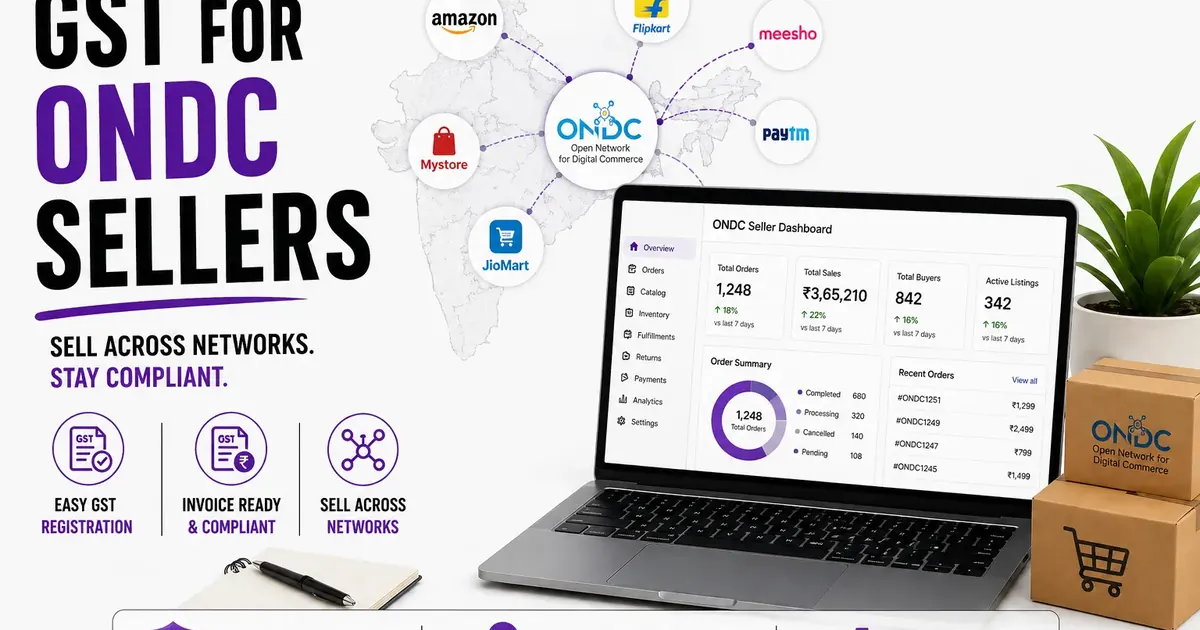
GST Registration for ONDC Sellers in India: 2026 Guide
ONDC seller GST guide - who needs GSTIN, business registration options, seller app onboarding, documents, benefits, tax setup, and common approval mistakes.
Read article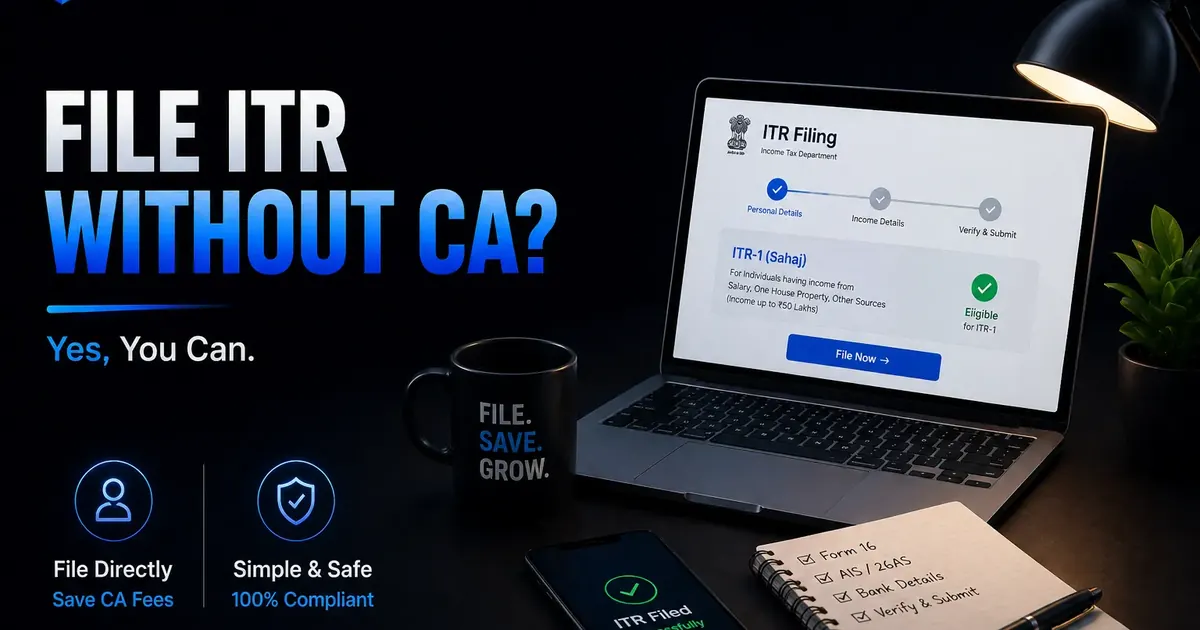
Can I File ITR Without a CA? (Honest Answer for 2026)
43.82% of Indians filed their ITR directly online - no CA needed. Which income profiles are safe to DIY, when a CA earns their fee, and real CA fee data vs portal (₹0).
Read article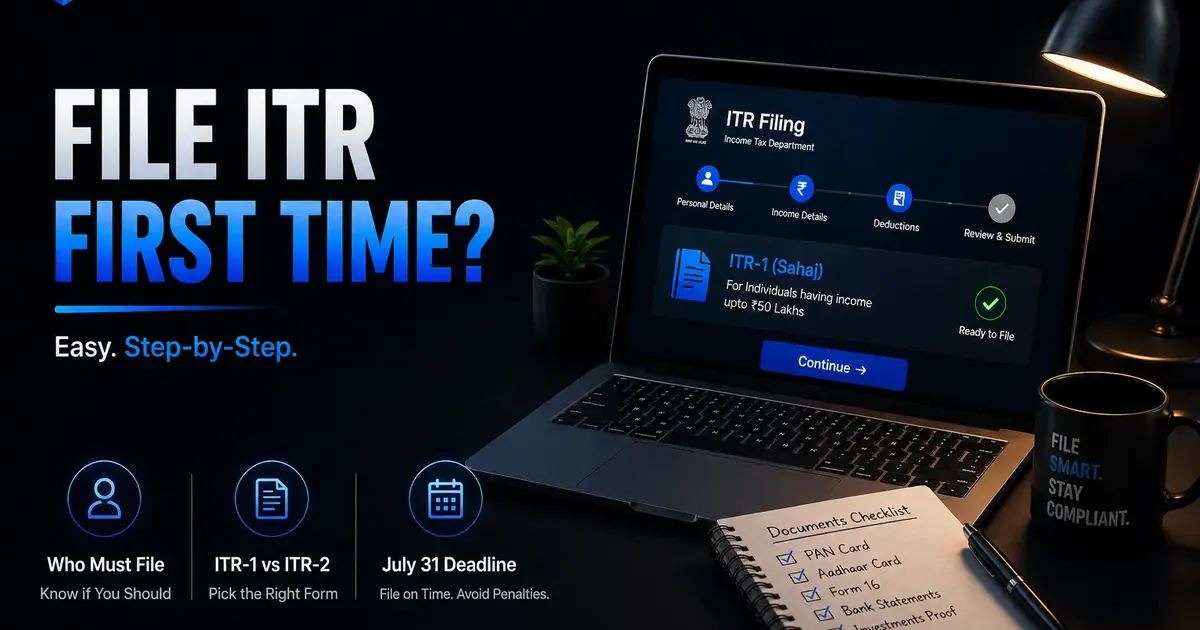
How to File ITR for the First Time in India: Step-by-Step (2026)
58.57 lakh Indians filed their first ITR last year. Covers who must file, which form (ITR-1 vs 2), documents needed, July 31 deadline, and new vs old regime for FY 2025-26.
Read article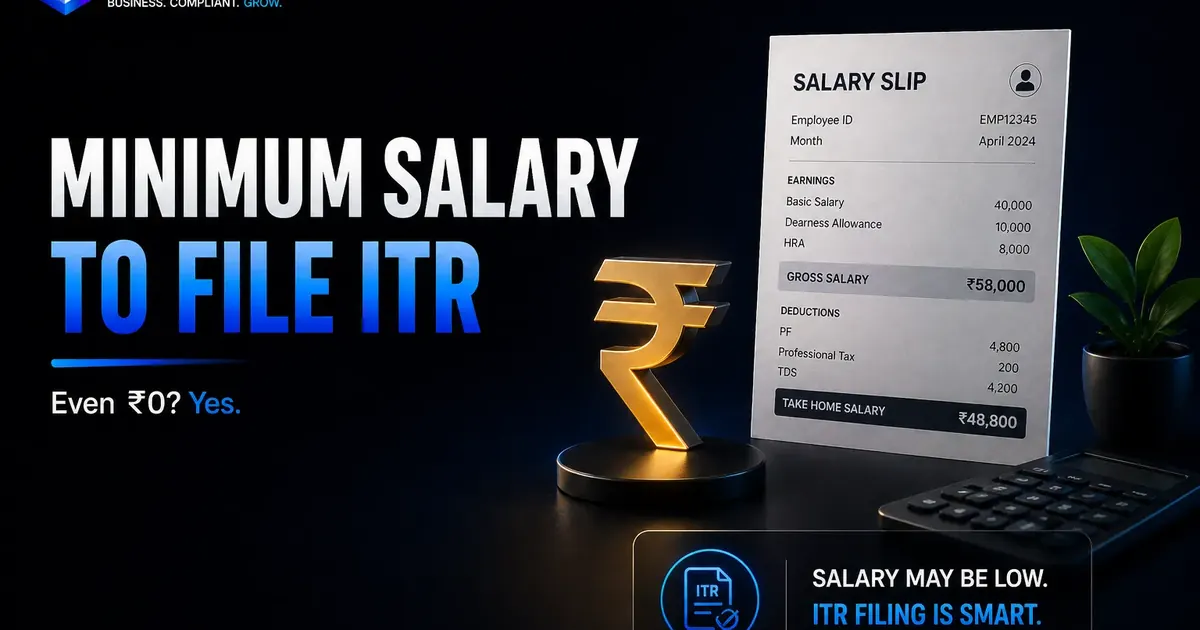
Minimum Salary to File ITR in India (2026): Real Threshold vs Mandatory Filing
Basic exemption is ₹3 lakh (new regime) or ₹2.5 lakh (old). But salary alone does not decide - TDS, foreign assets, and Section 139(1) triggers can force filing at ₹0 income.
Read article
Who Needs to File ITR in India? 9 Triggers Beyond the Income Threshold (2026)
Income above ₹3 lakh is the obvious trigger - but 8 other rules under Section 139(1) force filing even at zero income, including foreign assets, ₹1 lakh electricity, and ₹2 lakh foreign travel.
Read article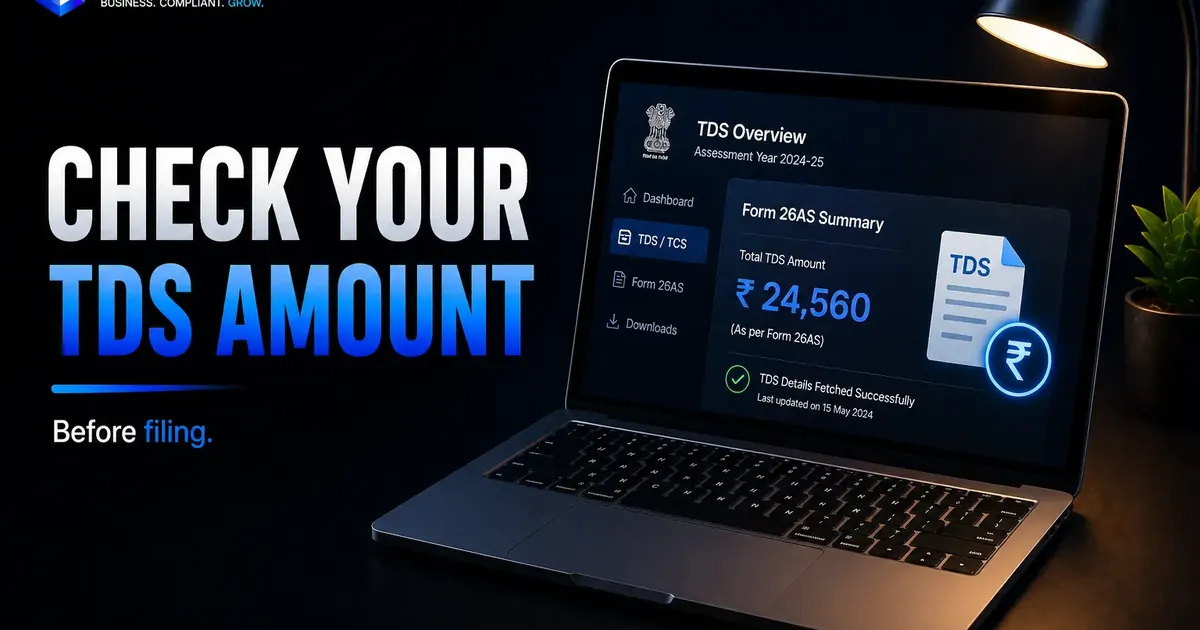
How to Check TDS Amount in India: Form 26AS, AIS, TIS Explained (2026)
TDS on your salary, FD interest, rent, or freelance fees? Three places to check - Form 26AS, AIS, TIS - and how to reconcile mismatches before filing your ITR.
Read article
Best Way to File Taxes in India (2026): DIY Portal vs CA vs Apps Compared
Portal DIY: ₹0. ClearTax/Tax2win: ₹500–₹4,000. Local CA: ₹500–₹10,000. Real comparison of speed, accuracy, and cost across 6 filing methods - picked by income profile.
Read article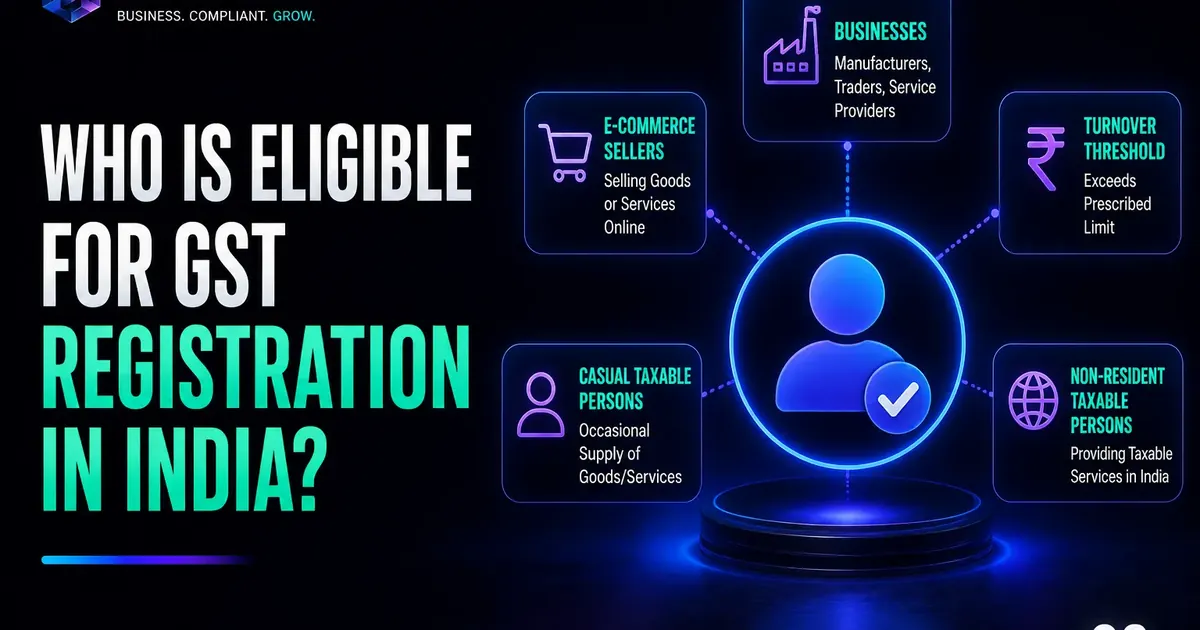
Who Is Eligible for GST Registration in India? (2026 Guide)
Threshold limits, voluntary registration, all 4 types of GST, and who can - or must - get a GSTIN. Plain answers for Indian founders and small business owners.
Read article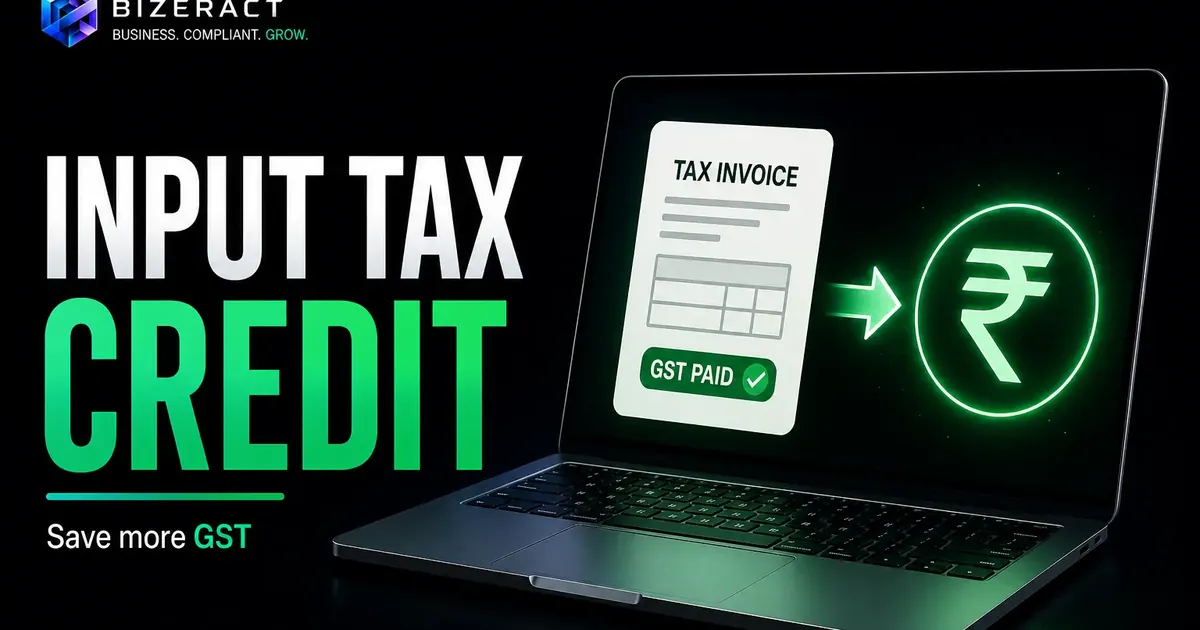
How to Claim GST Input Tax Credit (ITC): Complete Guide for Indian Businesses (2026)
Learn GST input tax credit rules, blocked ITC, Section 17(5), GSTR-2B reconciliation, and four mistakes that get credits reversed in 2026 filing.
Read article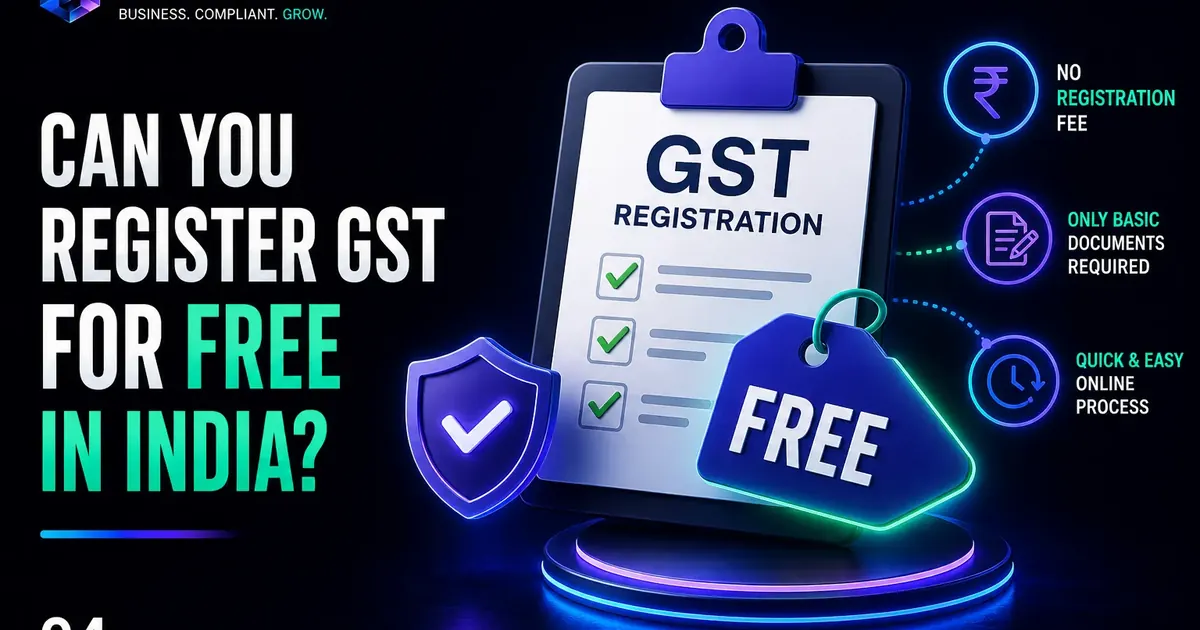
Can You Register GST for Free in India? Portal Cost vs CA Fees (2026)
Government GST registration is zero-fee on the portal. But CA charges range from ₹500 to ₹3,000. When DIY makes sense, when it doesn't, and how to choose a CA.
Read article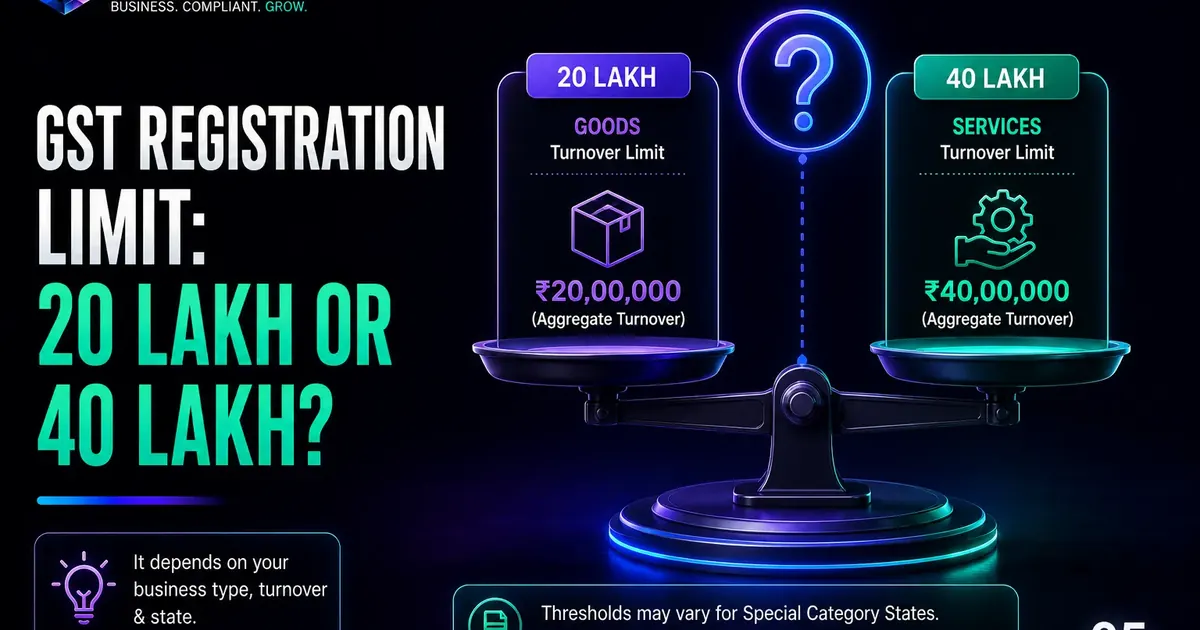
GST Registration Limit: 20 Lakh or 40 Lakh? Plus Documents & Why It's Required
The 20 vs 40 lakh GST threshold explained - which applies to your business, what documents you need to file, and why GST registration is legally required above the limit.
Read article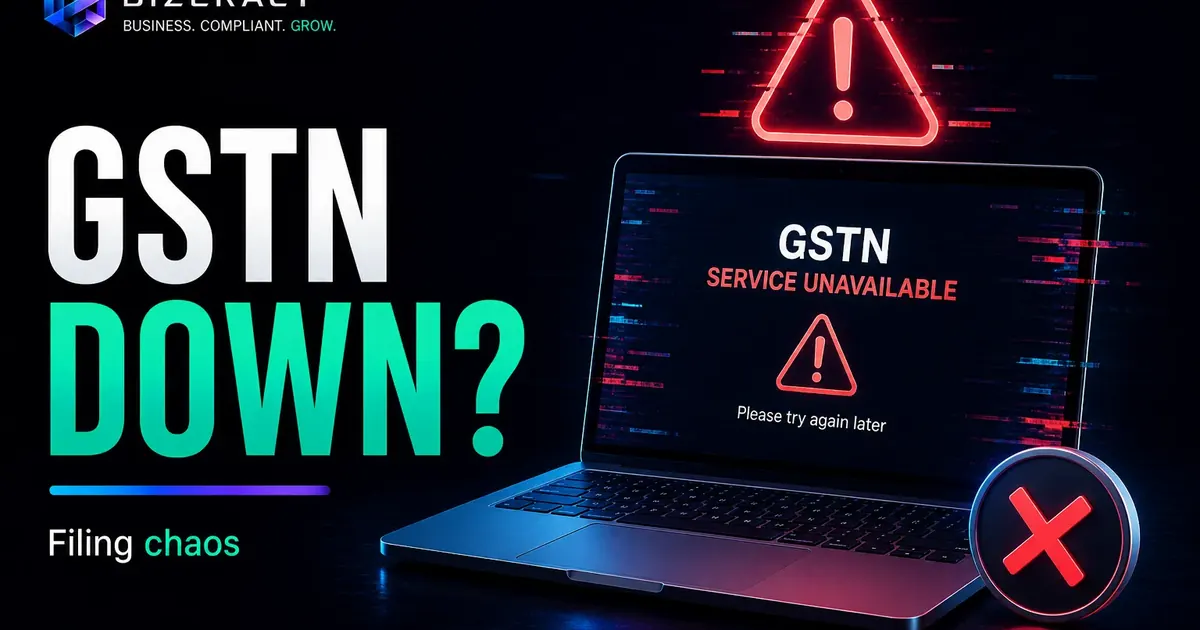
GSTR-3B Deadline Extension: April 21 GST Portal Glitch
CBIC extended March GSTR-3B to April 21 after GST portal downtime. See what changed, who got relief, and what late filers should do next in GST filing.
Read article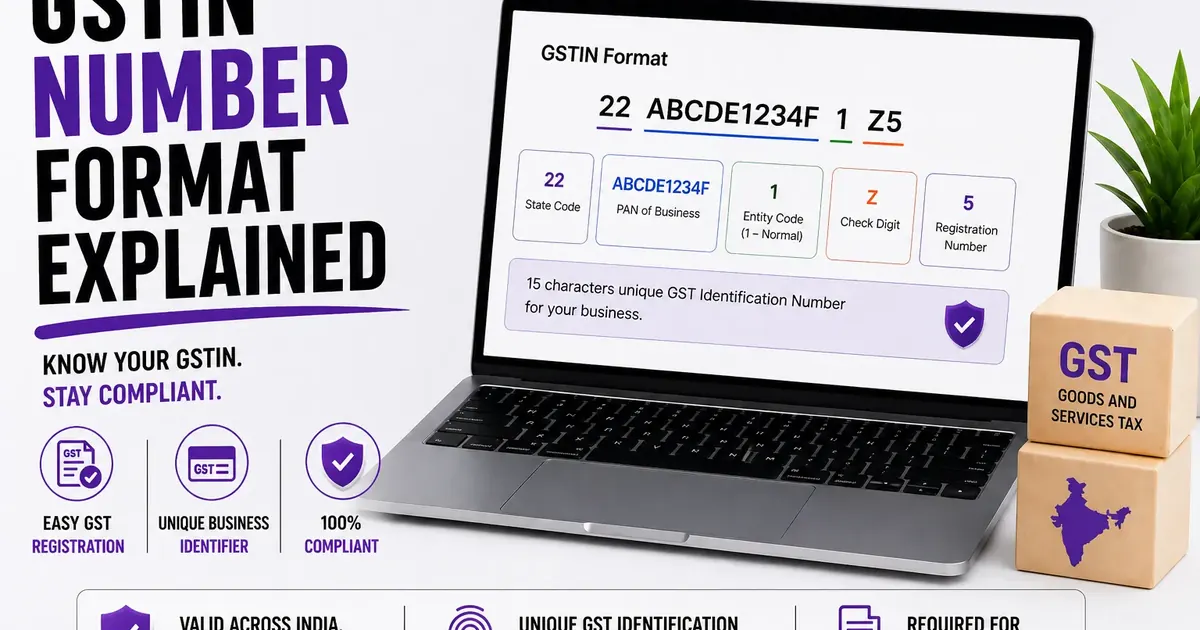
GSTIN Number Format Explained: How to Read a GST Identification Number
Decode any 15-digit GSTIN: state code, PAN, entity number, check digit, and verification steps to avoid invoice fraud before accepting bills today.
Read article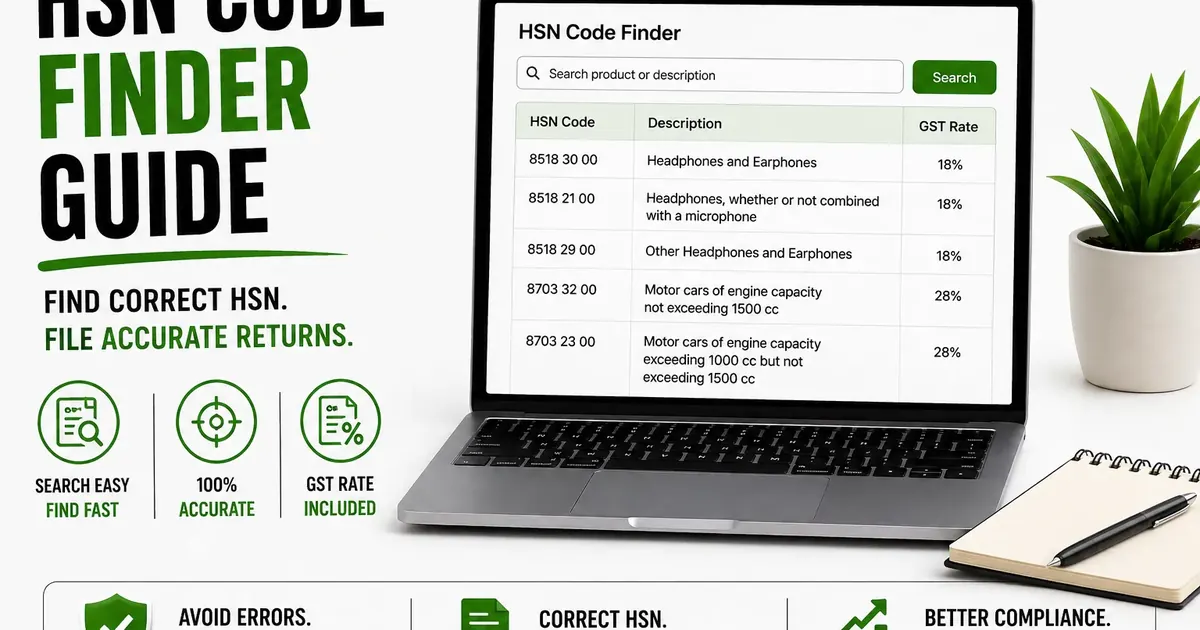
HSN Code Finder Guide: How to Pick the Right HSN/SAC for Your Business
Find the right HSN or SAC code before GST filing. Avoid blocked ITC, invoice mismatch, and notices with this practical HSN lookup guide for 2026.
Read article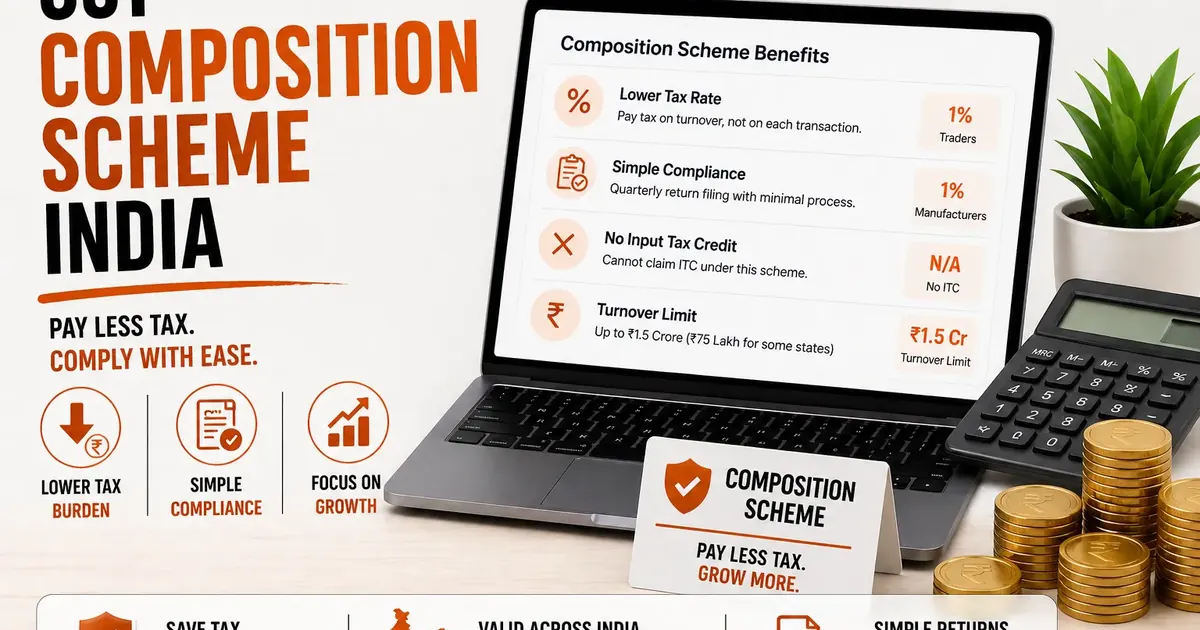
GST Composition Scheme: Who Should Opt In (and Who Shouldn't)
Composition scheme lets small businesses pay 1-6% GST and file quarterly, but blocks ITC and interstate sales. See when it fits in 2026 with examples.
Read article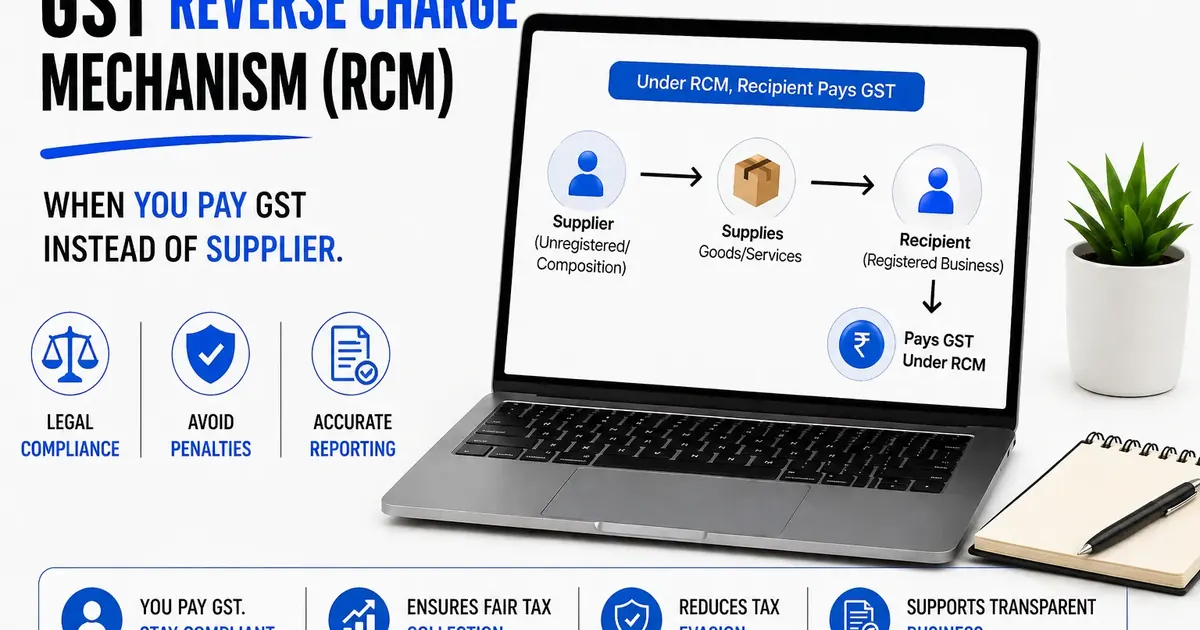
GST Reverse Charge Mechanism (RCM): A Plain-English Guide
Understand GST reverse charge: when buyers pay GST, which services are covered, how ITC works, and mistakes that trigger notices in 2026 filing today.
Read article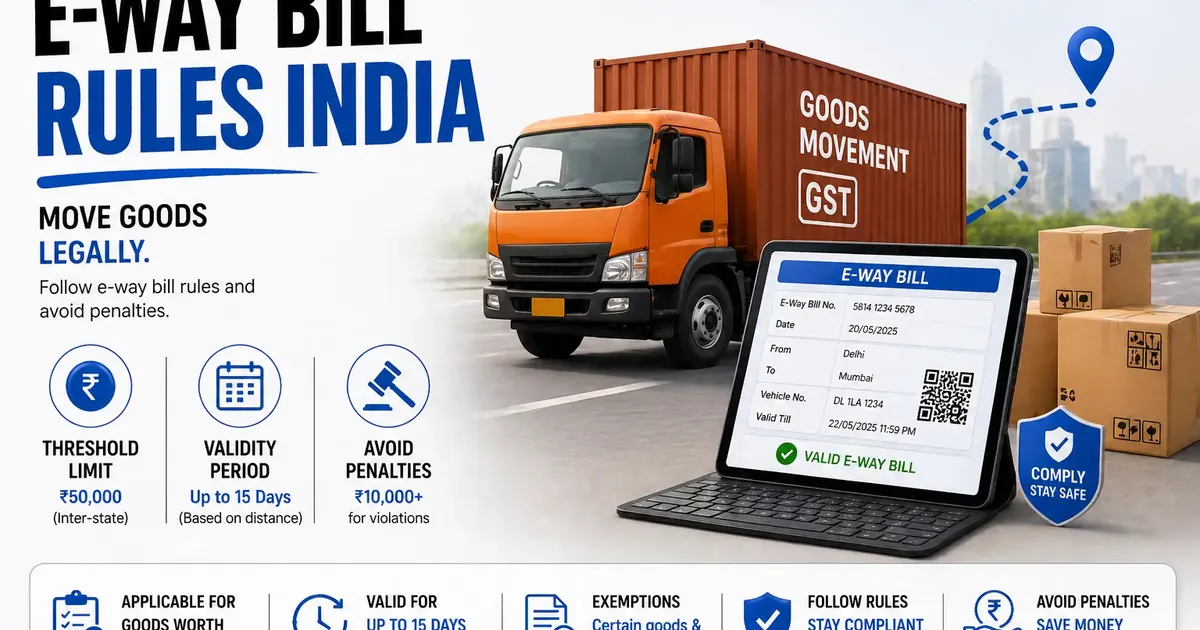
E-Way Bill Rules India: Limits, Validity and Penalties 2026
Know when e-way bills apply, how validity works, which movements are exempt, and what penalties hit if goods move without one in India before dispatch.
Read article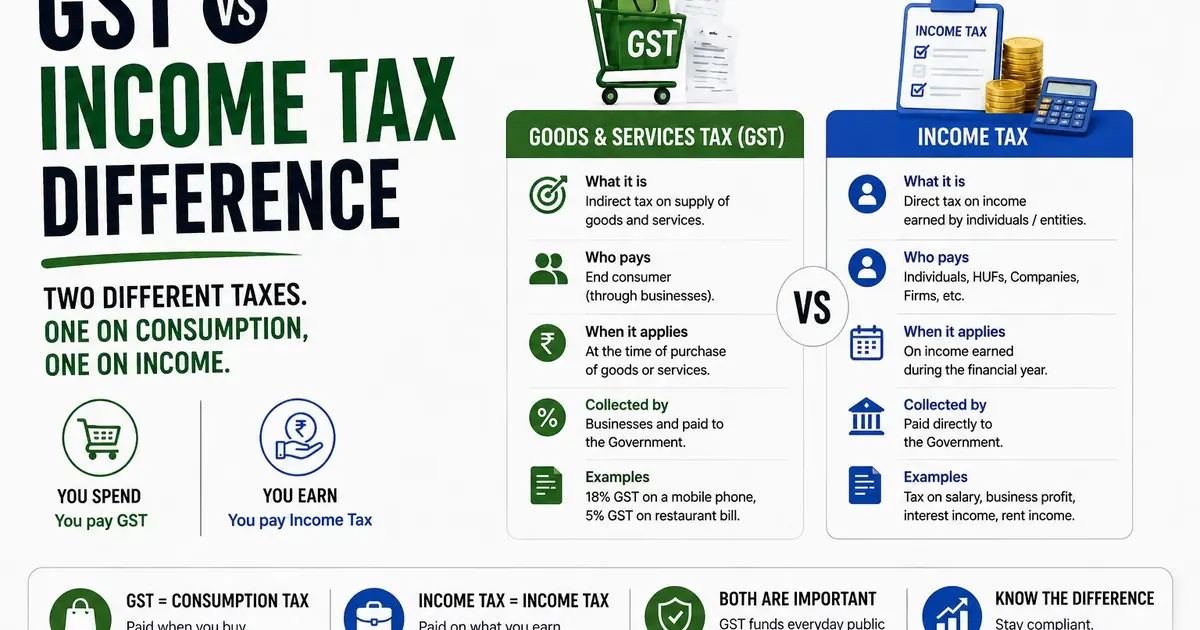
GST vs Income Tax: What's the Difference? (Simple Breakdown)
GST and income tax are different: one taxes consumption, one taxes income. See examples, registration triggers, and compliance impact for SMBs today.
Read article
GST for Ecommerce Sellers: Amazon, Flipkart, Meesho 2026
Why every marketplace seller needs GST - TCS rules, compulsory registration, state-wise GSTIN, and how to register in 24 hours before your first listing.
Read article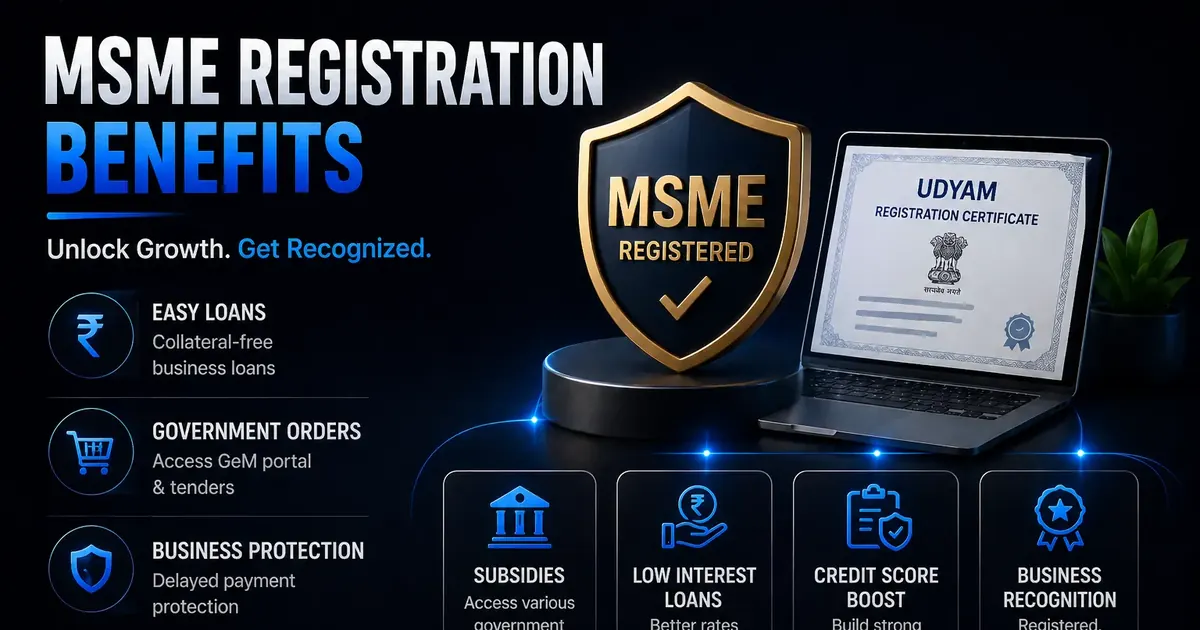
MSME Registration Benefits: Why Every Small Business Needs Udyam
Udyam / MSME registration unlocks government subsidies, collateral-free loans, GeM listings, and delayed-payment protection. 100% online, 5 minutes.
Read article
How to Start a Business in India: Registration, GST & Compliance Checklist
Start a business in India with entity selection, current account setup, GST, MSME, and the top compliance steps first-time founders often miss early.
Read article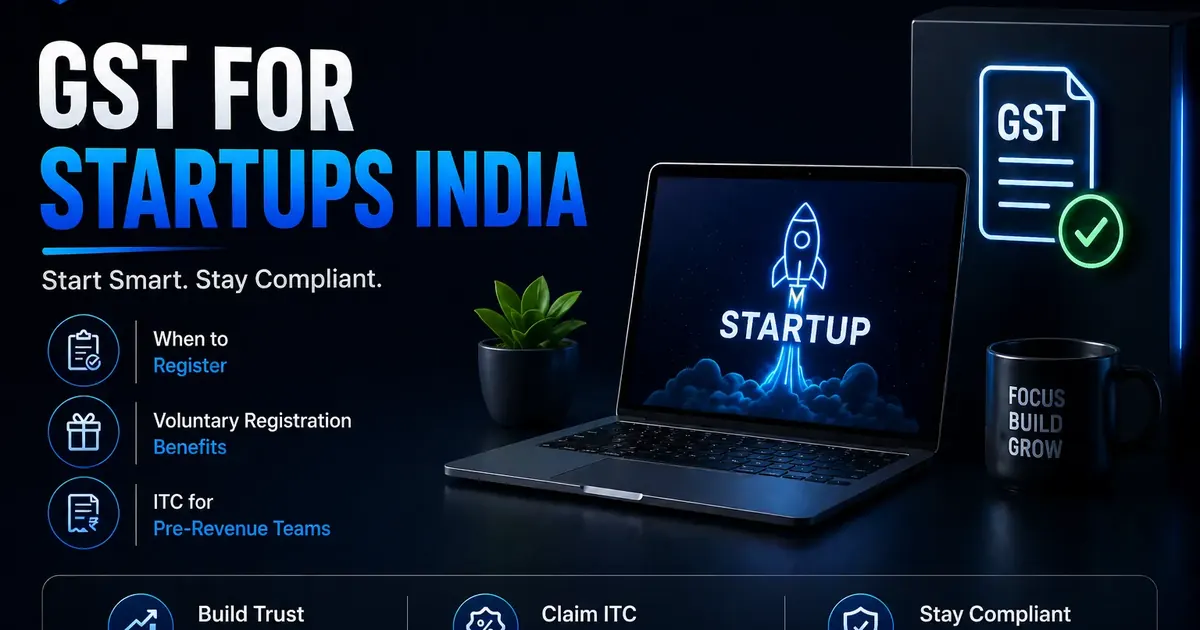
GST Registration for Startups in India: When to Register & Why
Startup founder guide to GST - threshold, voluntary registration, ITC benefits for pre-revenue teams, and getting a GSTIN before your first invoice.
Read article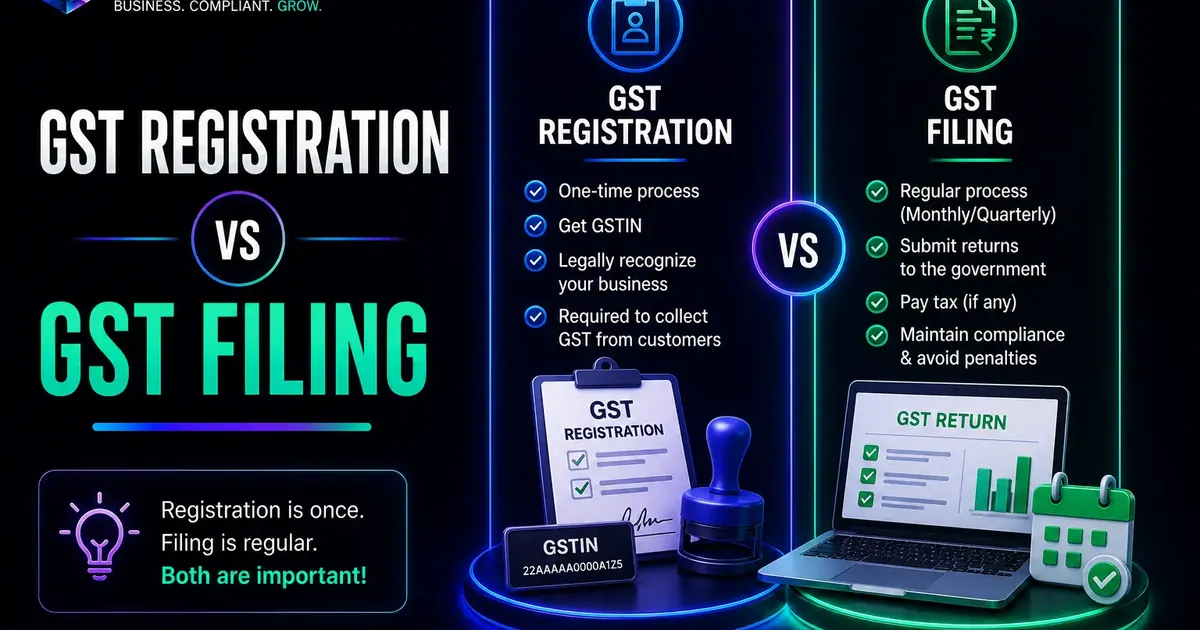
GST Registration vs GST Filing: What's the Difference?
GST registration and GST return filing are two separate things - and confusing them costs small businesses penalties. Clear breakdown of what each means.
Read article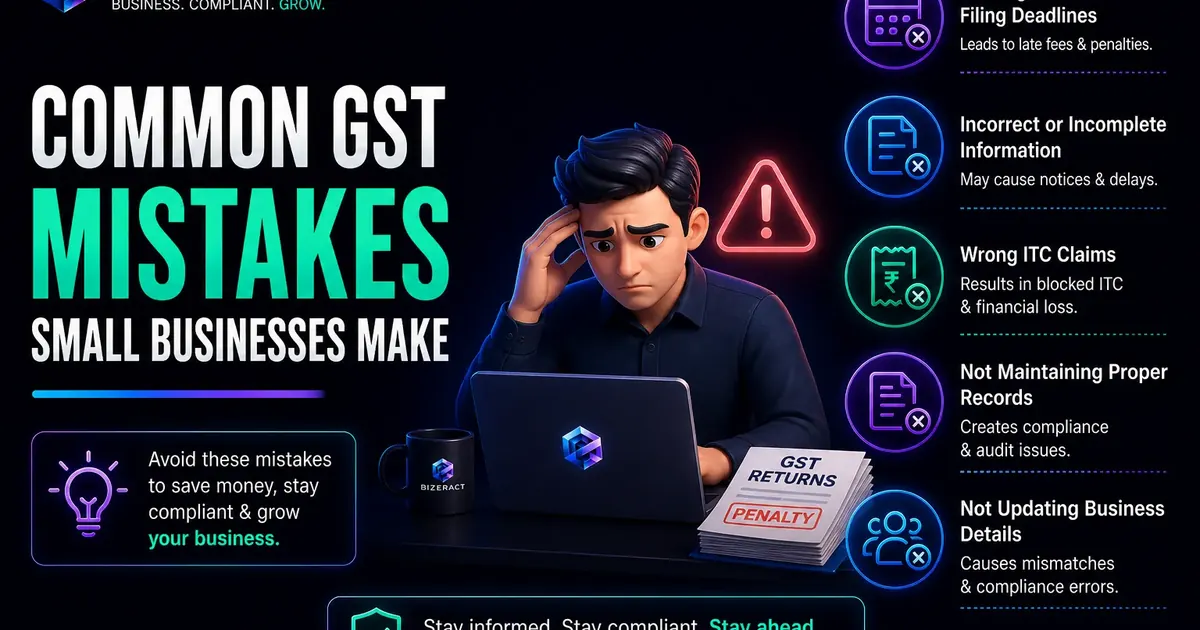
7 Common GST Mistakes Small Businesses Make (and How to Avoid Them)
Avoid the 7 GST mistakes that trigger notices, late fees, blocked ITC, and return mismatches. Includes fixes before your next GSTR-1 or GSTR-3B filing.
Read article
Do Freelancers Need GST Registration in India in 2026?
When a freelancer must register for GST, when it's optional, and why voluntary registration often makes financial sense even below the threshold.
Read articleLet's talk about your business.
Tell us what you're working on and where you want to go. We'll put together a plan. No obligation, no sales pitch.
- Free 30-minute call
- A plan built around your goals
- No obligation, no pressure
- Your own account manager