7 Common GST Mistakes Small Businesses Make (and How to Avoid Them)
Avoid the 7 GST mistakes that trigger notices, late fees, blocked ITC, and return mismatches. Includes fixes before your next GSTR-1 or GSTR-3B filing.
- Most small-business GST mistakes come from late filing, invoice mismatch, wrong HSN/SAC, missed ITC reconciliation, and weak document records.
- Check GSTR-1, GSTR-3B, GSTR-2B, invoice series, and payment challans before each return instead of waiting for a GST notice.
- Fix repeated GST errors with a monthly filing checklist and professional review when ITC, e-way bills, or notices are involved.
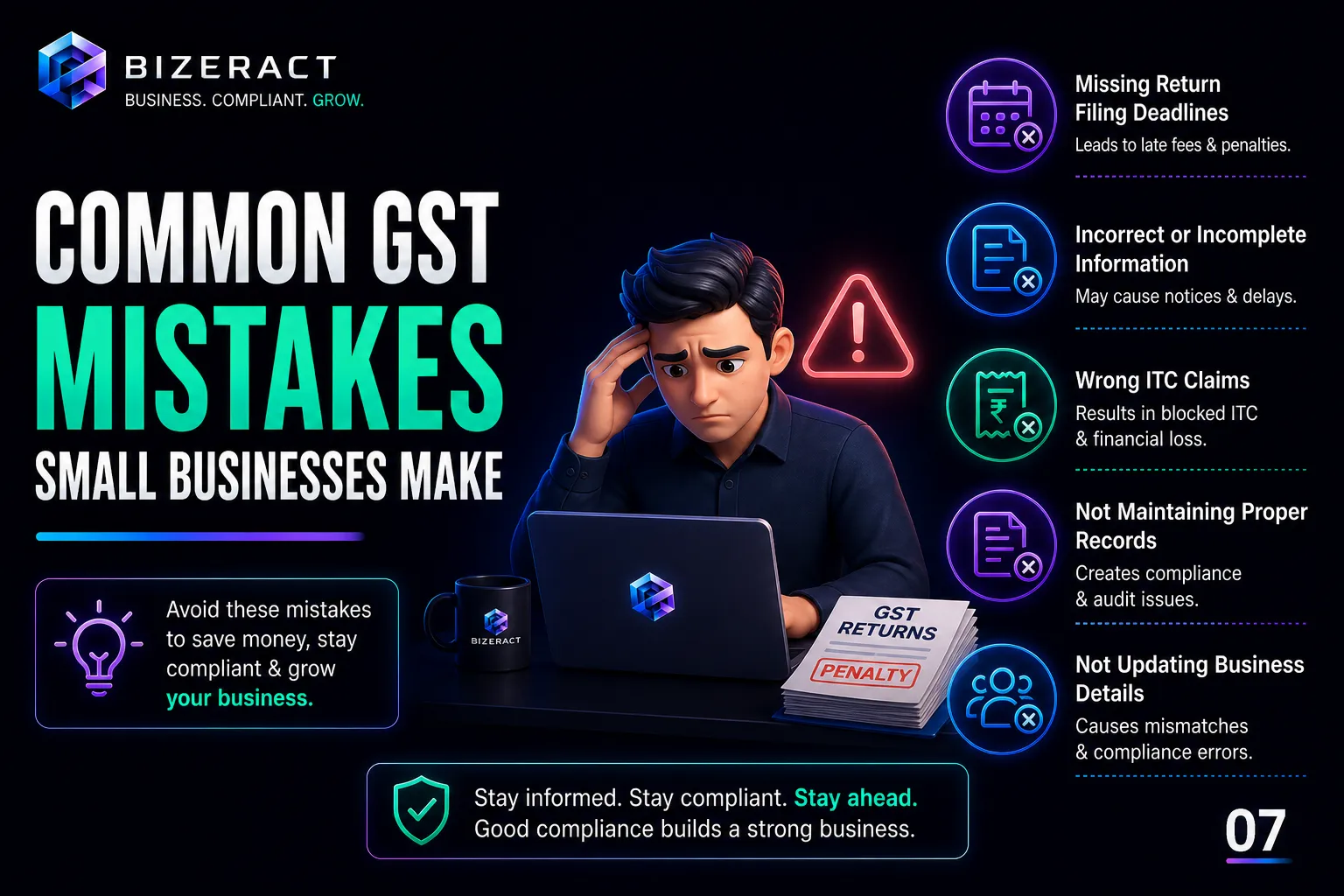
Small businesses lose lakhs to GST mistakes every year - not from bad intent, but from small operational slips that compound over months. Here are the seven we see most often, with fixes for each.
1. Registering late
Crossing the turnover threshold (₹20L services / ₹40L goods) triggers mandatory registration. But many owners check their numbers only at year-end, by which point they've been collecting payments without a GSTIN for months. Penalty: 10% of tax due, minimum ₹10,000, plus loss of ITC on past purchases.
Fix: Track monthly turnover. Register the quarter you see the threshold approaching, not after you cross it.
2. Filing nil returns late (or not at all)
A common misconception: "I had no sales, so I don't need to file." False. Nil returns are still returns and still have deadlines. Late fees of ₹20/day compound into a few thousand rupees if you skip several months.
Fix: Set a calendar reminder for 11th and 20th of every month. File nil GSTR-1 and GSTR-3B even when you've had no activity.
3. Claiming ITC on blocked credits
Input Tax Credit is not universal. GST law blocks ITC on personal consumption items, motor vehicles (with exceptions), food/beverages for staff, club memberships, and a few other categories. Claiming ITC on these triggers notices during audit.
Fix: Review Section 17(5) of the CGST Act or have your CA tag ineligible expenses in your books so they're excluded at filing time.
4. Ignoring GSTR-2B reconciliation
GSTR-2B is the auto-generated statement showing which of your suppliers actually uploaded your invoice. If your supplier forgot, that ITC is not available to you until they fix it - but many small businesses claim it anyway and face reversals later.
Fix: Reconcile your purchase register against GSTR-2B monthly. Chase suppliers who haven't uploaded. This one habit alone saves more than any other.
5. Wrong HSN/SAC codes on invoices
HSN codes determine your tax rate. An incorrect code = incorrect tax collected = officer dispute at audit. Especially painful when you've been wrong for years.
Fix: Cross-check every SKU's HSN against the CBIC HSN directory once, lock it into your invoicing system, and re-verify only when government changes the schedule.
6. Mixing personal and business expenses
Sole proprietors often pay business expenses from personal accounts or vice versa, then lose track of which invoices to claim ITC against.
Fix: Open a dedicated business current account. Run all business spend through it. Always.
7. No first-month filing after registration
Brand new GSTINs still owe a first GSTR-3B, even with zero activity. Many newly-registered owners wait for "real" sales and miss the first due date. Late fees start accruing from day one.
Fix: Our GST registration bundle includes your first month's filing automatically - exactly because this is the most-missed deadline in the whole registration journey. New GSTIN holders should also use the first 30 days after GST registration checklist to update invoices, bank records, HSN, GST portal settings, and first return reminders before the first due date arrives.
Bonus: not reviewing cancellation triggers
Six consecutive monthly return misses auto-cancels your GSTIN. Revival costs time, paperwork, and re-doing compliance.
Related guides: GST registration for small business and GST registration for proprietorship walk through the full registration + first-filing sequence without the traps above.
What to verify before acting on 7 Common GST Mistakes Small Businesses Make
Rules and platform behaviour change after an article is published. Confirm thresholds, registration status, return forms, document rules, and portal notices against the GST Portal before you act on anything below, because the right answer depends on your entity, state, turnover, and current setup.
Going deeper: GST Return Filing, GST Annual Return GSTR-9, and GST Notice Reply.
Frequently asked questions
What is the most common GST mistake small businesses make?
The most common mistake is filing returns without reconciling sales invoices, purchase invoices, GSTR-1, GSTR-3B, and GSTR-2B. This creates turnover mismatch, blocked ITC, and avoidable notices.
Can GST mistakes be corrected after filing?
Many GST mistakes can be corrected in later returns or through amendment tables, but the fix depends on the return type, financial year, and deadline. Do not ignore a mismatch once it appears.
How can a small business avoid GST notices?
Use a monthly checklist: match invoices with books, verify GSTINs, reconcile ITC with GSTR-2B, pay tax on time, preserve e-way bills, and review unusual transactions before filing.
Let's talk about your business.
Tell us what you're working on and where you want to go. We'll put together a plan. No obligation, no sales pitch.
- Free 30-minute call
- A plan built around your goals
- No obligation, no pressure
- Your own account manager